How polishing works
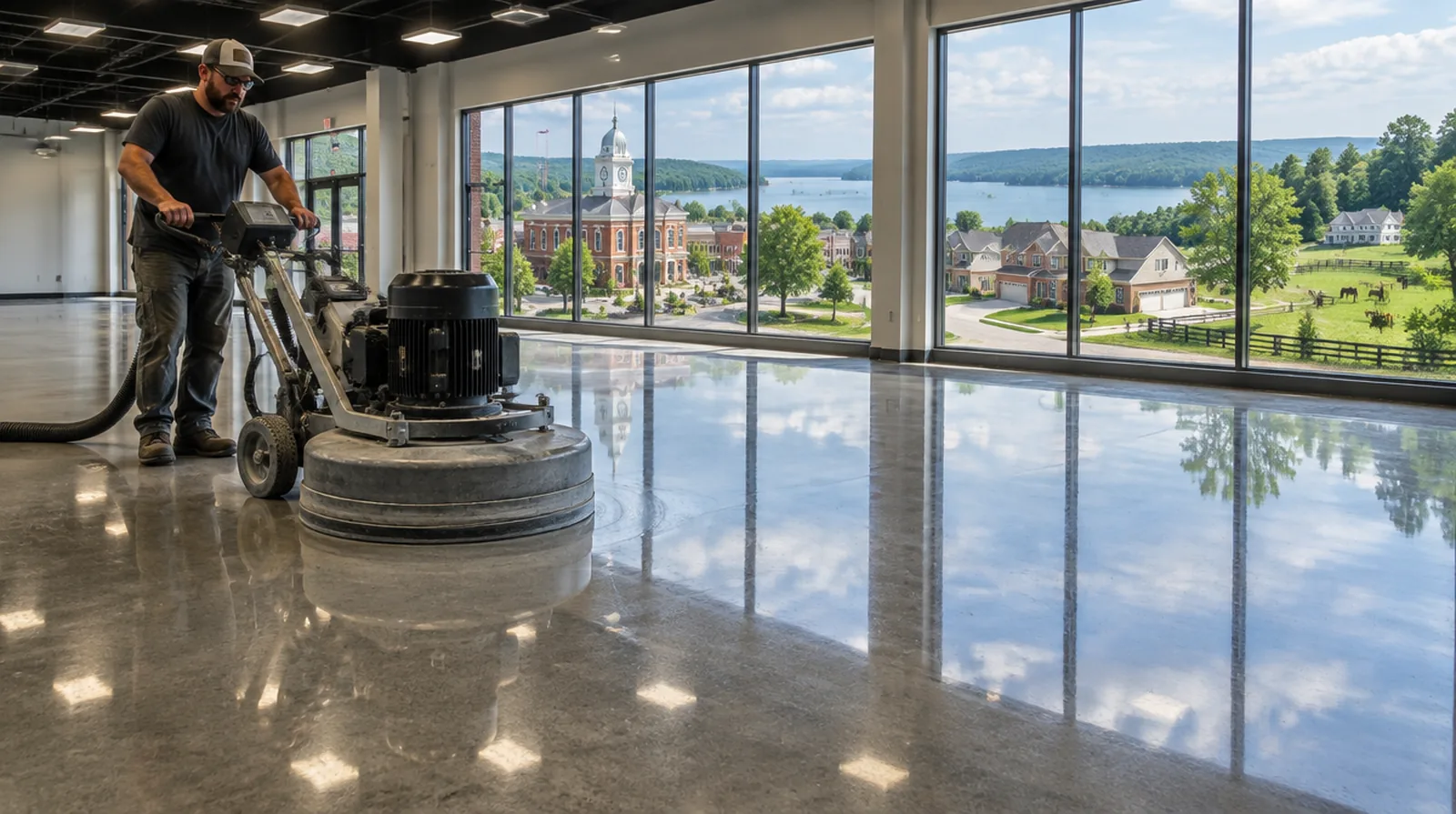
Polishing is a mechanical process. Heavy grinders fitted with diamond tooling cut down the surface, starting coarse and moving through finer grits until the concrete shines. Partway through, a liquid densifier is applied. It reacts with the concrete to harden the surface, reduce dusting and help it take a polish. The final result is a hard, reflective floor that is part of the slab itself, not a coating that could peel.
Choosing exposure
- Cream: very little grinding, showing the smooth top layer.
- Salt and pepper: light grinding exposing fine sand and small stones.
- Full aggregate: deeper grinding revealing larger stones in the mix.
Each slab is different. We grind a test area so you can see what your concrete holds before choosing.
Sheen levels
Polish can be a soft satin or a high gloss. Higher gloss requires more passes and more time. Satin hides scratches and dust better; gloss reflects light and brightens a room. We help you match the sheen to how the space is used.
Color
Dyes can add tone, from warm browns and tans to gray and black. They penetrate the concrete rather than sitting on top, so they wear with the floor rather than peeling. Saw-cut lines or borders can add pattern.
Is your slab a good fit?
Polishing works best on sound, reasonably flat concrete. Old adhesive from carpet or tile can usually be removed. Heavy cracks, patched areas and stains will show, since polishing does not hide them. Some people love that character; others prefer a coating. We will give an honest opinion after seeing the floor.
Where it fits well
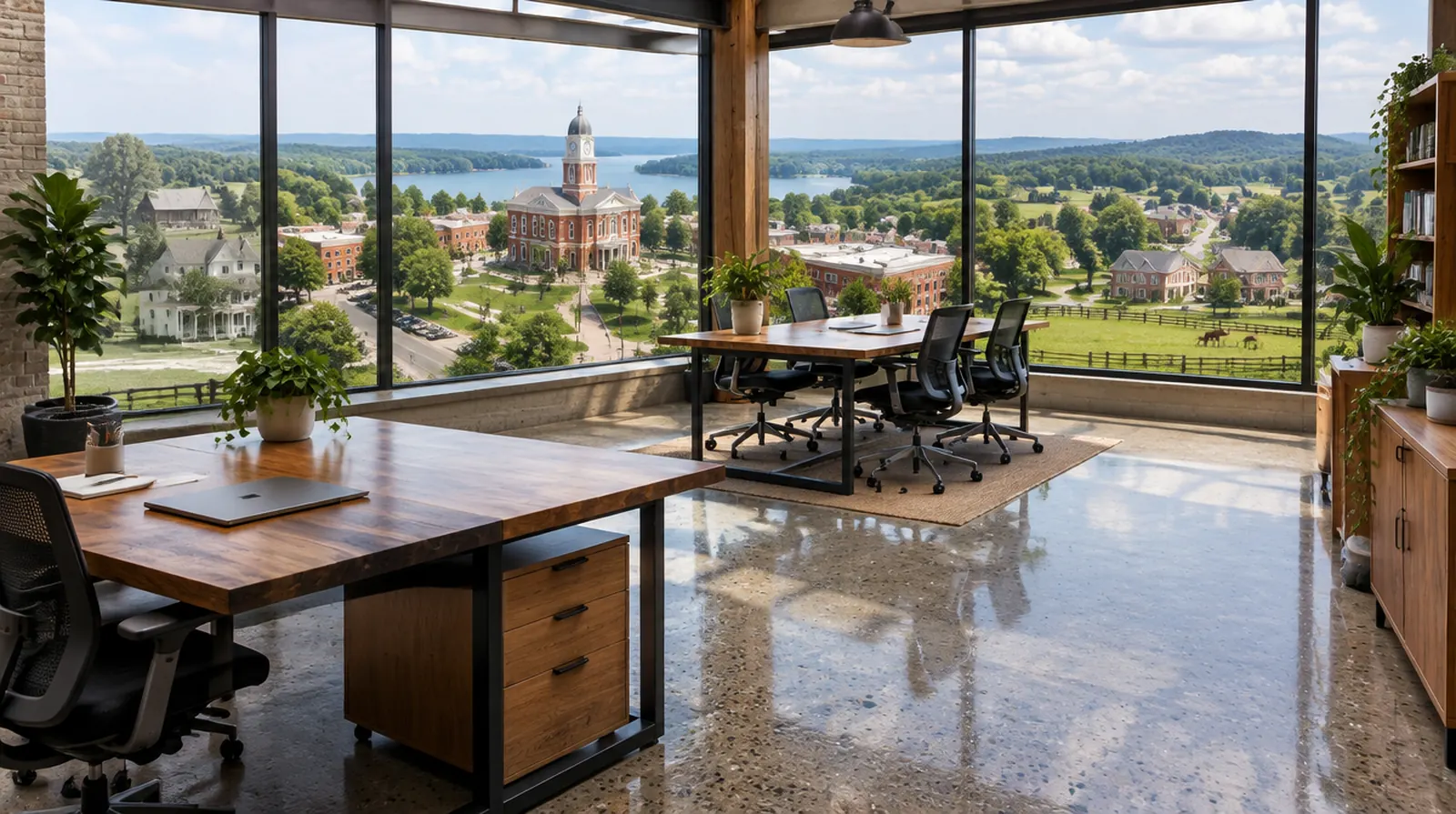
New homes with slab-on-grade floors, renovated barns turned into living space, warehouses, retail stores, offices, schools and showrooms all suit polished concrete. In large facilities, the bright surface can improve lighting and lower cleaning costs.
Protecting the polish
A guard or stain protector is applied after polishing to resist spills like oil, coffee and wine. Polished floors resist stains well but are not immune, so prompt cleanup still matters. In homes, area rugs and felt pads protect the finish.
Maintenance
Dust mop daily in busy spaces and clean with a neutral cleaner. Commercial floors benefit from periodic burnishing to bring back shine. No waxing or stripping is needed, which is one of the biggest savings compared with tile or vinyl.
Questions
Is it slippery?
Clean, dry polished concrete has good traction; wet or dusty floors are slicker.
Is it dusty to install?
We grind wet or with HEPA vacuums to control dust.
Can a garage be polished?
Yes, though coatings resist tire marks and fluids better.
See a test patch
Request a free estimate to look at your slab.
Barn conversions and modern farmhouses
Older barns converted into homes, offices or event spaces often have slabs that tell a story, with patches, old drain lines and worn paths. Polishing brings out that history instead of hiding it, and many owners love the result. In new modern farmhouse builds, polished slab floors pair well with shiplap, exposed beams and large windows, and they handle muddy boots and dogs far better than hardwood. Radiant heating tubes in the slab work especially well with polished concrete, since there is no flooring layer to slow heat transfer. We coordinate with builders so the slab is protected during construction and polished once the drywall dust has settled.
We are happy to arrange a visit to a finished polished floor so you can see the sheen and aggregate in person before deciding on your own project.
to look at your slab.
Call (615) 527-8443 for a free estimate.