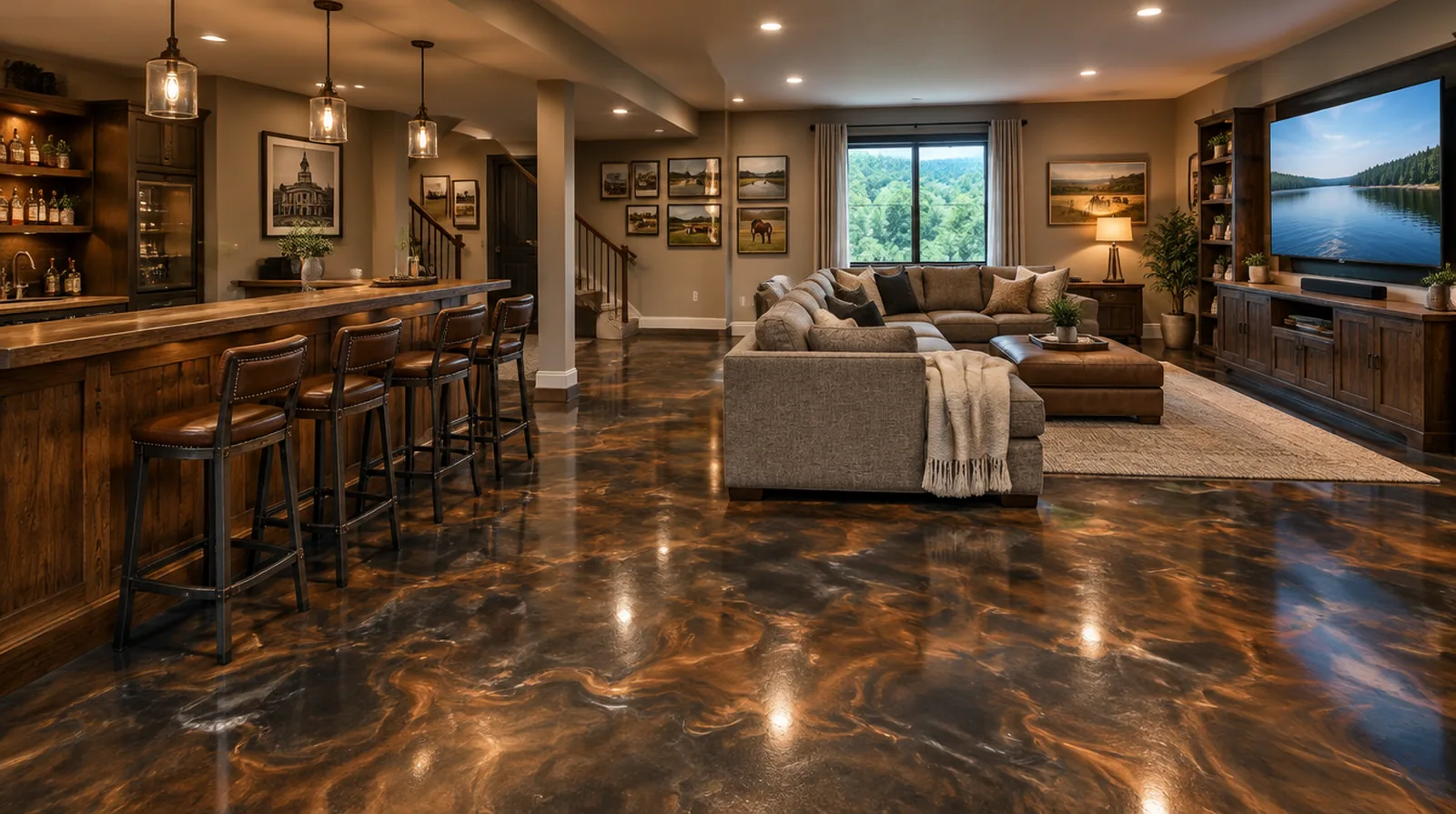
A floor no one else has
Metallic epoxy is a clear resin loaded with shimmering pigments. During installation, the resin is spread and then worked by hand with rollers, brushes and sprays to form swirls, ripples and veins. Because light reflects off the pigment differently from every angle, the floor appears to move as you walk across it. No two metallic floors are the same, which is part of the appeal.
Popular rooms
In homes, metallic floors are a favorite for finished basements, bonus rooms over garages, home bars, theaters and game rooms. In businesses, they show up in salons, boutiques on the square, tasting rooms, car and boat showrooms, and office lobbies. Basements are especially good candidates because the slab is already there and a metallic coating turns a cold concrete room into a finished space without tile or carpet.
Basements need moisture checks
Below-grade slabs are more likely to have moisture coming through them, and clear metallic resin shows the effects of moisture quickly as haze or bubbles. We test before quoting, and if vapor levels are elevated, we install a vapor-mitigating primer first. If a basement has active water intrusion, that needs to be fixed before any coating goes down, and we will tell you plainly.
Preparation and base coats
A metallic floor magnifies whatever is under it, so the substrate must be smooth. We grind the slab, fill cracks and pits, and grind repairs flush. A primer and a tinted base coat follow. The base color affects the final look a great deal; a black base makes metallic pigments pop, while a white or gray base gives a softer, marble-like result.
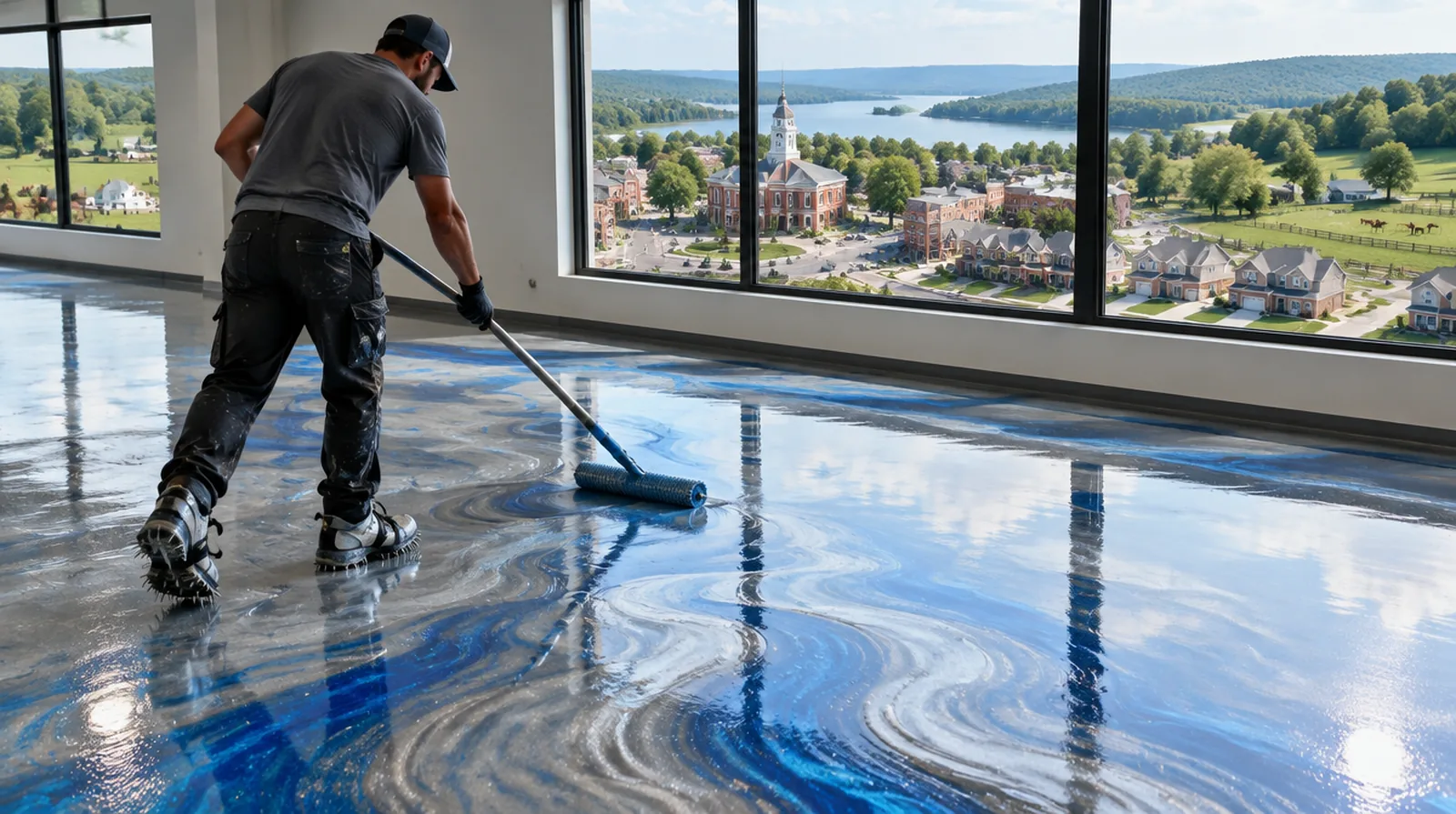
Choosing a look
- Bronze and copper: warm tones that pair with wood and leather.
- Silver and charcoal: a cool, modern industrial feel.
- Blue and teal: watery patterns, a nod to the lake.
- White and gray marble: a bright, elegant option for living spaces.
We make sample boards in your chosen colors so you can see them in your room's light.
Protecting the finish
A clear urethane or polyaspartic topcoat goes over the metallic layer to add scratch resistance and UV stability. Glossy floors show fine scratches from grit, so we often suggest a satin topcoat in busy areas. Walk-off mats at doors catch the grit that causes most wear.
Traction
Smooth metallic floors can get slick when wet. In bars, kitchens and entryways we blend a clear fine grit into the topcoat. In dry rooms like theaters and offices, a standard finish is usually fine.
Timeline
Most metallic floors take three days: preparation and primer, base and metallic pour, then topcoat. Light foot traffic can resume about a day after the topcoat, with furniture returning a few days later. Commercial spaces can be scheduled after hours.
Care
Dust mop regularly and clean with a neutral cleaner and microfiber mop. Put felt pads under furniture. Avoid abrasive scrubbers. A worn topcoat can be renewed without disturbing the design below.
Questions
Can I pick exactly where the swirls go?
We can guide direction and movement, but the pattern is always somewhat organic.
Is metallic epoxy durable?
Yes, it is thick and hard, though gloss shows scratches more than texture.
Can it go in a garage?
Yes, with a tough topcoat, though flake hides wear better.
Design your floor
Contact us to see samples and plan colors.
Showrooms and tasting rooms
Boat dealers, car showrooms and local tasting rooms use metallic floors to make an impression. Under display lighting, the depth and shimmer draw attention and photograph well.
to plan a metallic floor.
Call (615) 527-8443 for a free estimate.